A decade of React Native

React Native at 10

A proven platform, and a safe bet for your next app
Talk to our React Native team

On March 26, 2015, Facebook open-sourced React Native. Ten years later it's the backbone of thousands of production apps, pulling over nine million npm downloads every week.

If you're a founder or product leader deciding what to build your next app in, the real question isn't whether React Native is exciting. It's whether it's a safe, durable bet. After a decade of shipping React Native apps, our answer is yes, and here's why.

Ten years, briefly

From a live demo on a conference stage to a default choice for mobile.

2015

React Native goes open source

Facebook releases React Native for iOS, with Android following later that year.

2015

Infinite Red goes all in

We incorporate and ship our first React Native client projects within months of the release.

2016

Ignite is born

We create Ignite, now the most popular third-party React Native boilerplate at nearly 20,000 GitHub stars.

2017

Chain React debuts

We host the first Chain React in Portland, the US conference dedicated to React Native.

2018

Enterprises move in

Microsoft ships React Native in Skype, and Meta announces the ground-up rebuild that becomes the New Architecture.

2019

Hermes ships

Meta unveils Hermes, a JavaScript engine built for React Native, onstage at Chain React, our conference. Apps start faster and use less memory.

2020

Xbox goes React Native

Microsoft rebuilds the Xbox app for Windows on React Native, replacing Electron.

2021

Coinbase bets 56 million users

Coinbase finishes rewriting its apps in React Native, moving 56 million users onto the new codebase.

2022

Hermes becomes the default

React Native 0.70 makes Hermes the default engine, and the New Architecture opens to early adopters.

2023

TypeScript by default

React Native 0.71 makes TypeScript the default for every new project, and the ecosystem follows.

2024

The New Architecture lands

React Native 0.76 turns the New Architecture on by default, the payoff of a six-year rebuild.

2025

The bridge is gone

The legacy architecture is frozen in June and removed entirely by fall. At React Universe Conf, Meta announces React Native 1.0 is on the way.

Now

Production-grade and growing

Stable and fast, with adoption still climbing. We'd stake a project on it, and we do, every week.

Backed for the long haul

React Native isn't one vendor's side project. Meta open-sourced it and still builds on it. Microsoft maintains React Native for Windows and macOS. A global community ships improvements every week. Discord, Coinbase, and Bluesky run on it, and so does the Starlink app. We've heard 'React Native is dying' every year since 2015, and a platform with this many backers isn't going anywhere.

Mockup of Infinite Red's open source React Native work
Device mockup of an app on the iPhone

It delivered on its roadmap

Anyone can get old; shipping what you promised is harder. The New Architecture is the default. The legacy bridge is gone. Hermes is the standard engine. Expo is how new apps get built. We've migrated client apps to the New Architecture ourselves, so we're not taking the release notes' word for it.

Ten years of shipping it, with us

Our story mirrors React Native's. Infinite Red bet on it in 2015 and built Ignite the next year. Today we host React Native Radio and run Chain React, the React Native conference. We started with startups and grew into enterprise work as the technology matured, the same arc React Native itself followed. When you build with us, you're working with people who have been here the whole decade.

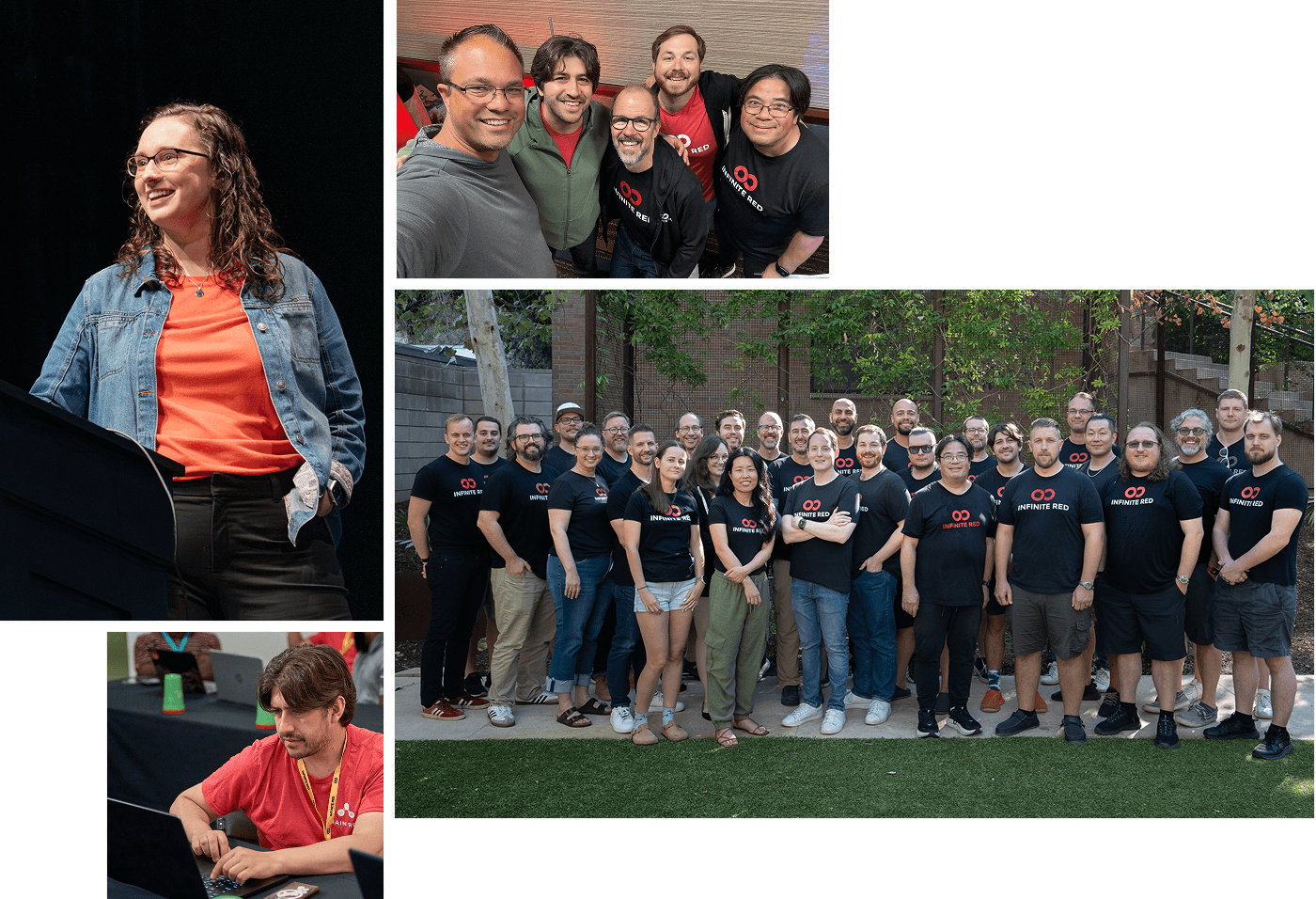
Photos of the Infinite Red team together

The original vision still holds

Re-read Facebook's 2015 announcement and it's striking how well it aged: native UI rendered from JavaScript, a web-like developer experience, code shared across platforms, incremental adoption inside existing apps, and open-source collaboration. A decade later those are still the reasons teams choose React Native, and every one of them has only gotten stronger.

Mature doesn't mean finished

React Native still moves quickly, and that's a feature, not a risk. It keeps shipping meaningful improvements while staying stable enough to run Discord and Coinbase at scale. You get both: a foundation that won't be abandoned, and a tool that keeps getting better under you. It isn't right for everything, though. High-end 3D games and apps that live deep inside one platform's native APIs are usually better built fully native, and if that's your app, we'll say so.

Photo of Gant Laborde and Mark Rickert hugging at a retreat.Photo of Todd Werth laughing during an online team game. Other members of the team are in the background.Photo of team members Jed Bartausky and Carlin Isaacson at a team dinner.Photo of Darin Wilson sitting at a table listening to a presentation

Planning your next app?

Tell us what you're building and we'll tell you straight whether React Native is the right call. Ten years of shipping React Native apps stands behind the answer.

Schedule a call