The state of React Native

Why React Native in 2026

Still the pragmatic choice, and thriving in the age of AI
Talk to our React Native team

Every year someone declares a mobile framework dead. Every year React Native keeps growing.

In 2026 the question isn't whether React Native is still relevant. It's why it keeps pulling ahead while the conversation around it changes. This year that conversation is dominated by one thing: AI. And AI turns out to be one of the best arguments for React Native yet.

The AI question everyone's asking

If AI can generate code, does the framework still matter? Won't an assistant just write native Swift and Kotlin for you?

It's a fair question, and the honest answer is that the framework matters more now, not less. AI writes the code it has seen the most of, in the languages it understands best. It still hands that code to a human team who has to read it, ship it, maintain it, and hire around it. The framework you choose decides how good the AI is on day one and how safe its output is on day one hundred.

On both counts, React Native is hard to beat.

Your AI tools already speak React Native

React and JavaScript top GitHub's and Stack Overflow's language rankings, so they're among the most-represented code the models ever trained on. The models behind Copilot, Claude, and Cursor learned from all of it, so they're fluent in React Native out of the box and need less hand-holding to stay on track. Ask for a screen, a hook, a navigation flow, and you get idiomatic code that matches how the ecosystem actually works.

That fluency compounds in agentic workflows, where the assistant reads your whole codebase and makes changes across it. The more familiar the language and patterns, the fewer wrong turns it takes. We spend a lot of time on agentic coding, and starting from the stack the models know best is a real head start over a smaller, less-represented language.

Mockup of Infinite Red's open source React Native work

React Native isn't just surviving. It's thriving.

The momentum is not subtle. React Native has settled into a long-term industry standard, shipping in production at companies like Shopify and Coinbase, with the community still growing. The New Architecture is now the default and the old bridge is being removed. Expo has become the default way to build, and it's investing directly in the agentic future: in 2026 Expo raised $45M and hired Meta's former React lead to go all-in on AI coding agents for React Native.

When the framework, its biggest tooling company, and the AI tools are all moving in the same direction, that's not a technology in decline. That's one gathering speed.

AI needs a foundation it can trust

The hype misses something, though. Developers have adopted AI tools fast: around 84% now use them or plan to. But trust in the output has fallen, from 40% in 2024 to 29% in 2025 (Stack Overflow's developer survey), as people learn where it breaks. Generated code still has to be reviewed, tested, and understood by someone who can be held responsible for it.

That's exactly where React Native's ecosystem earns its keep. TypeScript catches the mistakes AI makes. A mature testing and linting stack keeps generated code honest. A massive community means the patterns the AI reproduces are well-worn and well-documented. And because it's all JavaScript, you can actually hire the people who will own that code, instead of staffing a scarce specialty.

AI makes a good engineer faster. It doesn't remove the need for one, and it doesn't remove the need for a codebase they can reason about. React Native gives you both.

The honest take

We're a React Native shop, so weigh this accordingly. AI is genuinely changing how apps get built, and it will keep changing. Some of that will help other frameworks too. But the combination that matters right now, a language the models know cold, an ecosystem that keeps generated code safe, a talent pool you can actually hire from, and a platform investing hard in the agentic future, is React Native's to lose.

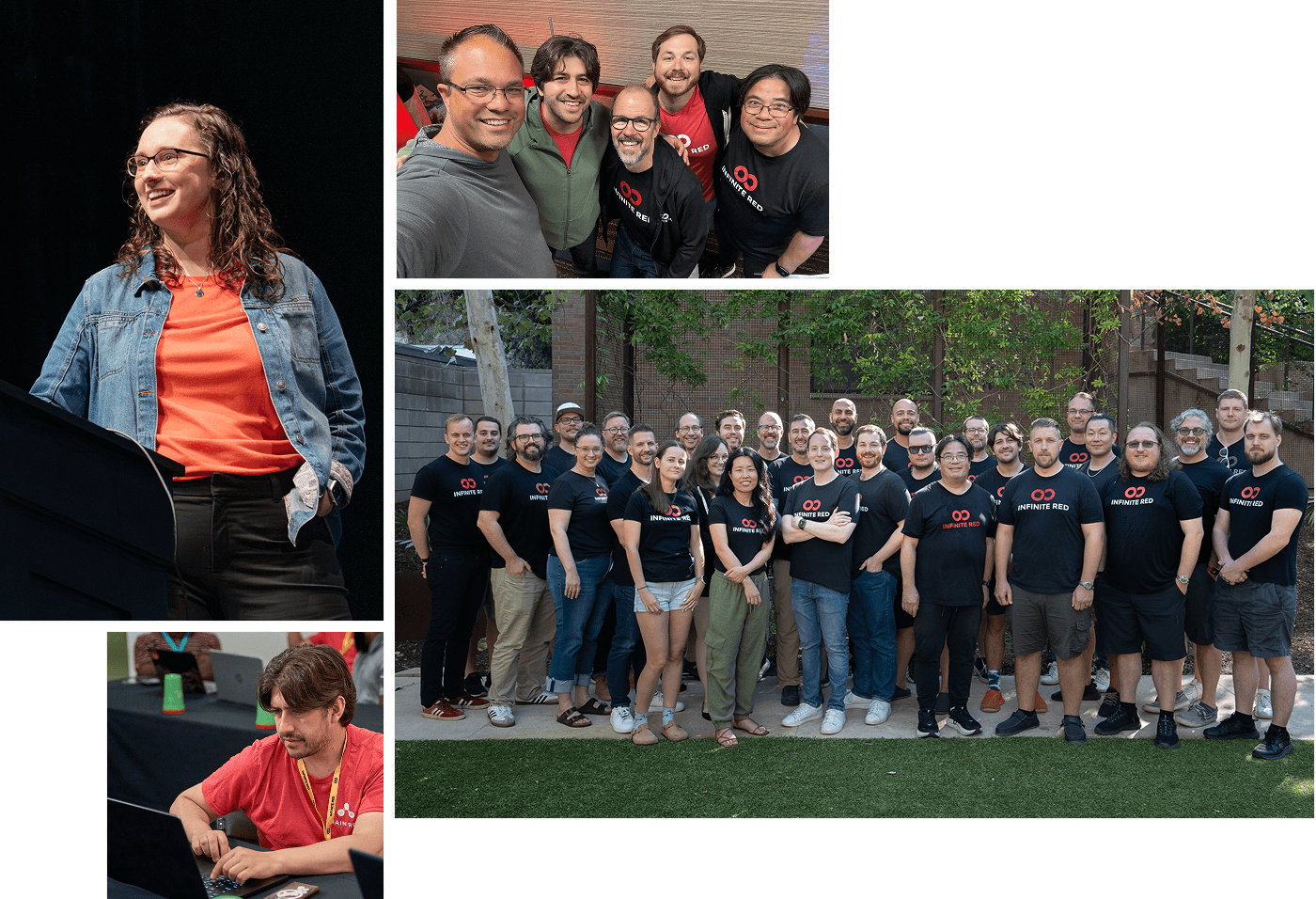
Photos of the Infinite Red team together

Why Infinite Red

We've built React Native apps since 2015, for clients like Mercari. We maintain Ignite and Reactotron, host React Native Radio, and run Chain React, the React Native conference. And we've put real time into agentic coding workflows, so we know where AI speeds a project up and where it quietly adds risk.

Photo of Gant Laborde and Mark Rickert hugging at a retreat.Photo of Todd Werth laughing during an online team game. Other members of the team are in the background.Photo of team members Jed Bartausky and Carlin Isaacson at a team dinner.Photo of Darin Wilson sitting at a table listening to a presentation

Planning your next app?

Tell us what you're building and we'll tell you straight whether React Native is the right call. A decade of shipping React Native apps stands behind the answer.

Schedule a call